

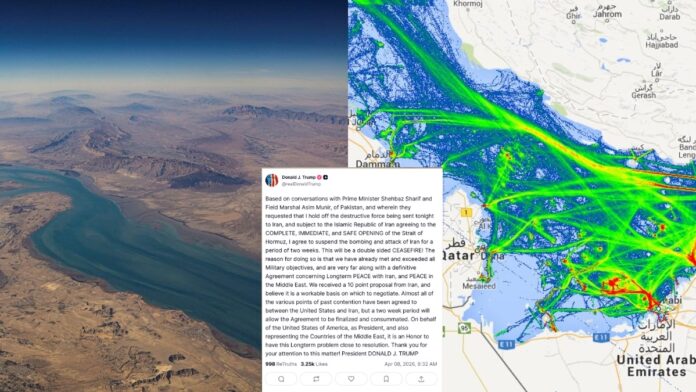
A US-Iran ceasefire brokered in Islamabad and a simultaneous UNSC veto by Russia and China are not isolated events. Together, they reveal how global conflicts are no longer resolved, but merely managed.
A pause engineered under pressure
The recent ceasefire between the United States and Iran, informally referred to as the Islamabad Accord, has been projected as a diplomatic breakthrough. In reality, it is a carefully engineered pause under extreme pressure.
Brokered through backchannel diplomacy led by Shehbaz Sharif and supported by Asim Munir, the agreement has temporarily halted a dangerous escalation. At a time when Washington, under Donald Trump, appeared prepared for expanded confrontation, and Tehran, represented by Abbas Araghchi, signalled resistance rather than retreat, Islamabad emerged as a rare channel of communication.
Yet the structure of the ceasefire reveals its limits. It is time-bound, narrow in scope, and deliberately open to interpretation. It suspends conflict without resolving it.
Hormuz: control without closure
At the heart of the agreement lies the Strait of Hormuz, the most critical energy chokepoint in the world.
The decision to reopen the strait under a form of Iranian military supervision marks a significant shift. Iran has not blocked Hormuz. Instead, it has demonstrated that influence over its operation can be as powerful as disruption.
For Tehran, this is strategic validation. For Washington, it is a reluctant accommodation of ground realities. For global markets, it introduces a new layer of uncertainty.
Oil flows may continue, but the question of control now overshadows the question of access.
The veto that redefines power
Even as Islamabad facilitated dialogue, events at the United Nations Security Council exposed the deeper geopolitical reality.
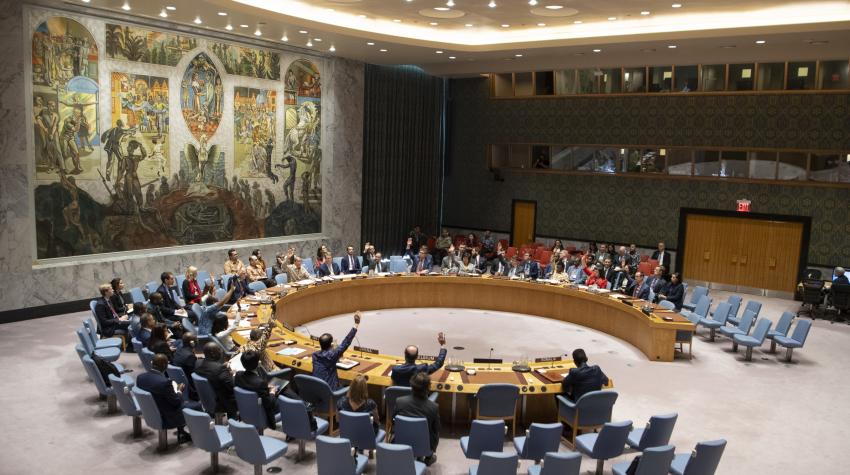
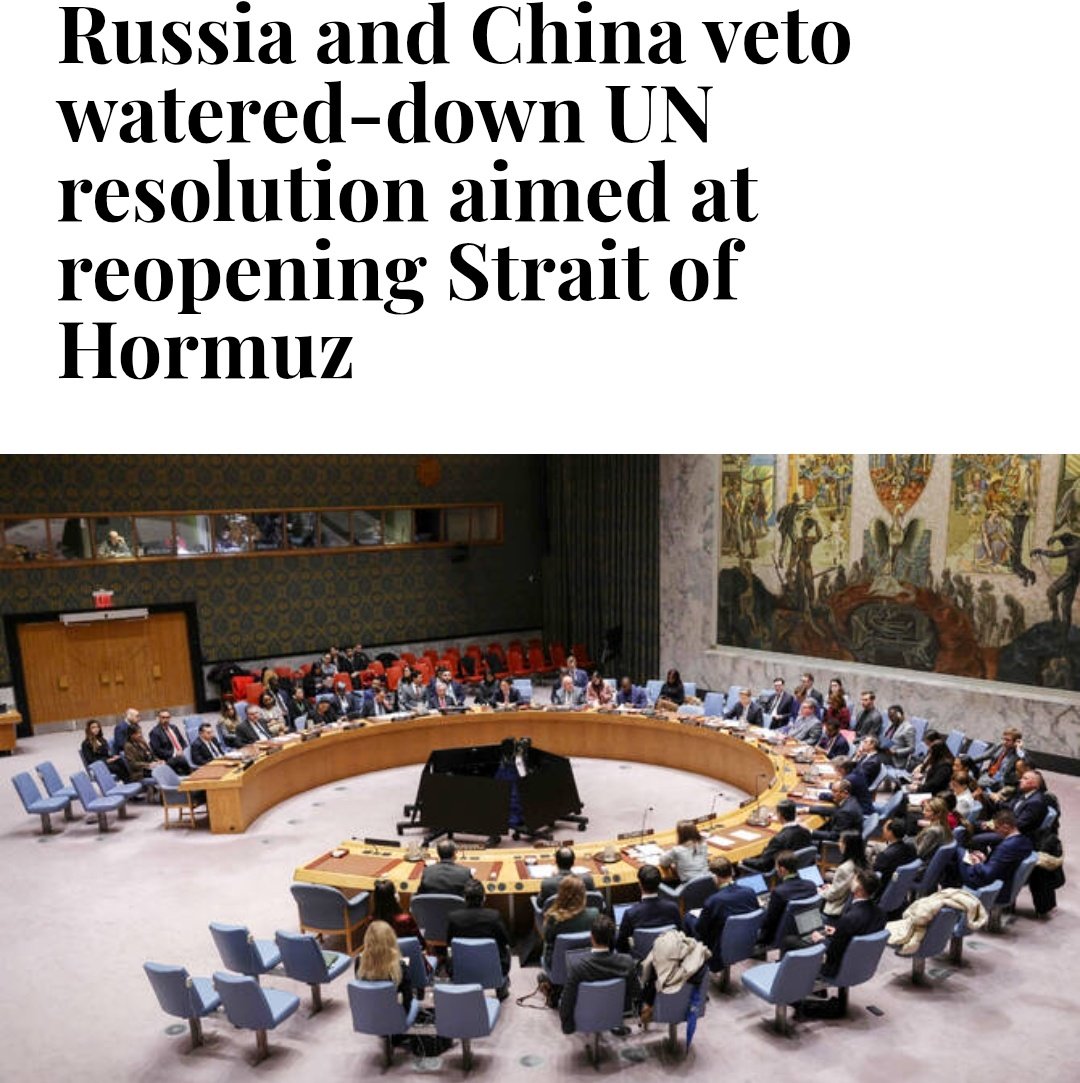
The veto exercised by Russia and China against a Western-backed resolution on maritime security in the Gulf was not merely procedural. It was structural.
The resolution sought to legitimise coordinated naval action to secure shipping routes. Its rejection signals that global enforcement mechanisms are no longer controlled by a single axis of power. The Council did not fail to act. It acted in division.
Pakistan’s calibrated neutrality
Pakistan’s role in this moment is both subtle and significant. By abstaining in the Security Council while actively mediating on the ground, it has attempted a delicate balancing act.
This dual posture allows Islamabad to maintain engagement with Iran, avoid alienating Western powers, and elevate its diplomatic standing.
However, such neutrality is inherently fragile. If the ceasefire collapses, Pakistan’s credibility as a mediator will be tested. In conflicts of this scale, proximity to negotiation often brings exposure to failure.
A conflict that refuses containment
One of the most revealing aspects of the ceasefire is what it excludes. Israel’s continued operations in Lebanon ensure that the conflict remains active beyond the Gulf.
This fragmentation is not incidental. It reflects the nature of contemporary conflict, where multiple theatres operate simultaneously, and escalation travels across them. The Islamabad Accord does not freeze the conflict. It redistributes it.
Energy markets and strategic uncertainty
The reopening of Hormuz does not restore stability. It redefines instability.
Markets respond not only to disruption but to perceived control. The idea that Iran can influence the flow of energy, even without blocking it, is enough to elevate prices, increase insurance costs, and force strategic recalculations.
In this sense, Hormuz has been transformed from a chokepoint of passage into a lever of pressure.
A system without consensus
At a broader level, these developments point to the erosion of institutional authority. The United Nations remains central, but its ability to produce consensus has diminished.
In its place, we see the rise of ad hoc diplomacy. Temporary arrangements. Bilateral interventions. Personality-driven negotiations.
The Islamabad Accord is a product of this shift. It exists not because institutions succeeded, but because they could not.
The meaning of the next 14 days
The two-week ceasefire is not a countdown to peace. It is a window of recalibration.
Both sides will reassess their positions, test diplomatic flexibility, and prepare for multiple outcomes. The core issues remain unresolved, from Iran’s nuclear programme to the broader security architecture of the Gulf.
If these questions are not addressed, the ceasefire will serve only as an interval.
Managing conflict, not resolving it
The Islamabad Accord and the UNSC veto are not separate developments. They are reflections of the same transformation.
Diplomacy continues, but without shared frameworks. Power is exercised, but without consensus. Conflicts are paused, but not settled.
The Middle East is no longer moving toward resolution. It is being managed through temporary arrangements that hold only as long as competing interests allow.
The real uncertainty is not whether this ceasefire will hold, but what shape the conflict will take when it inevitably does not.

