

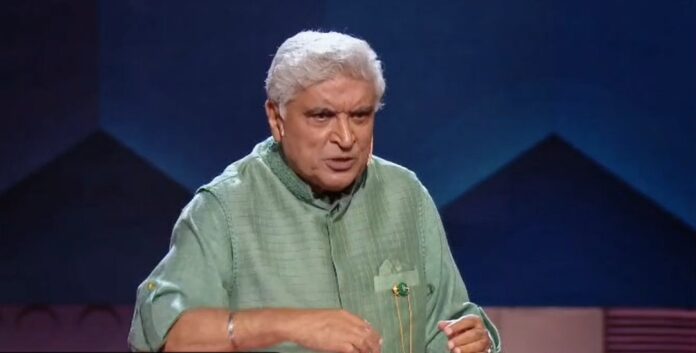
Javed Akhtar’s TED Talks remark on “you know what I mean” reignites debate on language change
An older clip from TED Talks, likely dating back to around 2017, has recently resurfaced in which Javed Akhtar remarks that young people seem short of words and therefore lean on phrases like “you know what I mean,” presenting it as a sign of declining linguistic ability. He made this observation while reflecting on contemporary speech habits and generational shifts in communication. The comment, sharp and familiar, echoes a long-standing concern that language is weakening among younger speakers. However, linguistic and sociological perspectives suggest a different reading: such phrases function as natural discourse markers rather than evidence of deficiency, indicating not a loss of expression but a shift in how meaning, connection, and emphasis are conveyed in modern speech.
The old habit of blaming the next generation
The belief that language is deteriorating is far older than social media, texting, or youth slang. Nearly every era has produced critics who thought the next generation was speaking badly, writing poorly, or thinking less clearly.
Ancient scholars complained about declining eloquence. Literary purists in many cultures rejected new spoken forms as inferior. South Asian language history also shows repeated anxiety whenever speech moved away from elite or classical norms.
This tells us something important. Complaints about language decline are usually not neutral observations. They are often emotional reactions shaped by nostalgia, status, and personal preference.
What “you know what I mean?” actually is
The phrase “you know what I mean?” is not evidence of weak vocabulary. In linguistics, expressions like this are often called discourse markers or pragmatic markers. These phrases do useful work in conversation. They help speakers:
- check listener understanding
- create shared context
- soften a statement
- maintain conversational rhythm
- invite agreement or emotional connection
In other words, the phrase is not a failure of language. It is part of language doing social work.
Why repeated phrases are normal in speech
Spoken language is not the same as written language. In writing, people revise, polish, cut repetition, and aim for neat structure. In speech, people think while talking. They adjust in real time. They respond to the listener’s face, tone, and reactions. That is why all languages contain repeated conversational phrases such as:
- you know
- I mean
- like
- right
- sort of
- actually
These are not empty signs of decay. They help speech move smoothly. They also reflect personality, rhythm, and interaction.
A close English equivalent of the South Asian idea of a habitual recurring phrase would be catchphrase, verbal habit, or discourse marker, depending on context. The most accurate linguistic term in this case is discourse marker.
Modern speech is more interactive, not weaker
Traditional literary culture often values complete sentences, controlled expression, and rhetorical precision. That model still matters in formal speech and writing. But everyday communication now gives greater importance to interaction.
Modern speech often aims to:
- sound relatable rather than distant
- create connection rather than display superiority
- build shared meaning rather than simply deliver information
So when a young speaker says “you know what I mean?”, they are often not searching for language. They are making sure the other person is with them. That is not verbal poverty. It is social intelligence.
Young people are often more linguistically flexible
The idea that young speakers have fewer words becomes even weaker when we look at multilingual societies like India. Many younger speakers move naturally between:
- formal English
- Hindi
- regional languages
- mixed registers such as Hinglish
- platform-specific digital language
A person who can shift between these forms is not linguistically weaker. They are operating across multiple systems of vocabulary, tone, identity, and audience. This is not simplification. It is expansion.
The sociology behind elite criticism of speech
Comments like Javed Akhtar’s often emerge from a literary and cultural position that treats formal language as the highest form of expression. That view is understandable, but it is also selective.
Sociolinguistics shows that societies tend to attach prestige to certain speech forms and dismiss others. Elite, formal, written, and standardised language is often treated as more intelligent. Informal, mixed, or youth-driven speech is then judged as careless or inferior. But that judgment usually says more about power and taste than about linguistic reality.
Language change is not language collapse
Languages are always changing. Vocabulary shifts. Pronunciation changes. Grammar patterns loosen in some areas and become more complex in others. New technologies create new expressions. New social realities create new styles of interaction. Language survives precisely because it adapts.
If young people are using phrases like “you know what I mean?” more often, that does not prove language is shrinking. It may simply show that conversation today is more collaborative, more rapid, and more socially tuned.
The real weakness in the argument
The weakness in the rhetoric is that it assumes expressive sophistication only exists in one form, usually literary or old-fashioned formal speech. But language has many strengths.
A person may be less ornate yet more communicatively effective. A speaker may use simpler vocabulary but show greater awareness of audience, context, and emotional tone. Language should not be judged only by how polished it sounds to an older cultural ear.
The younger generation has not abandoned language. It has adapted language to new speeds, new platforms, new identities, and new forms of social exchange.
The claim that younger people are short of words does not stand up well under linguistic scrutiny. Phrases like “you know what I mean?” are not signs of deficiency. They are normal and meaningful parts of spoken interaction.
Language today has not become weaker. It has become more dynamic, layered, and socially responsive. The real issue is not whether the younger generation lacks words. It is whether older critics are willing to recognise new forms of fluency when they hear them.

