

The growing politics of renaming Mughal-era places and institutions in India and why changing names cannot erase history
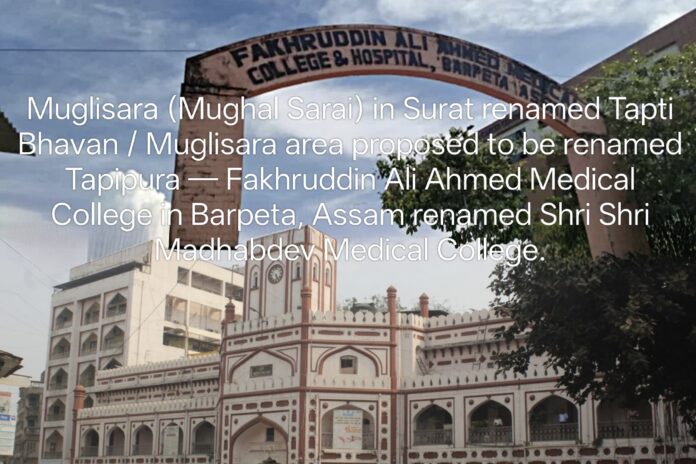
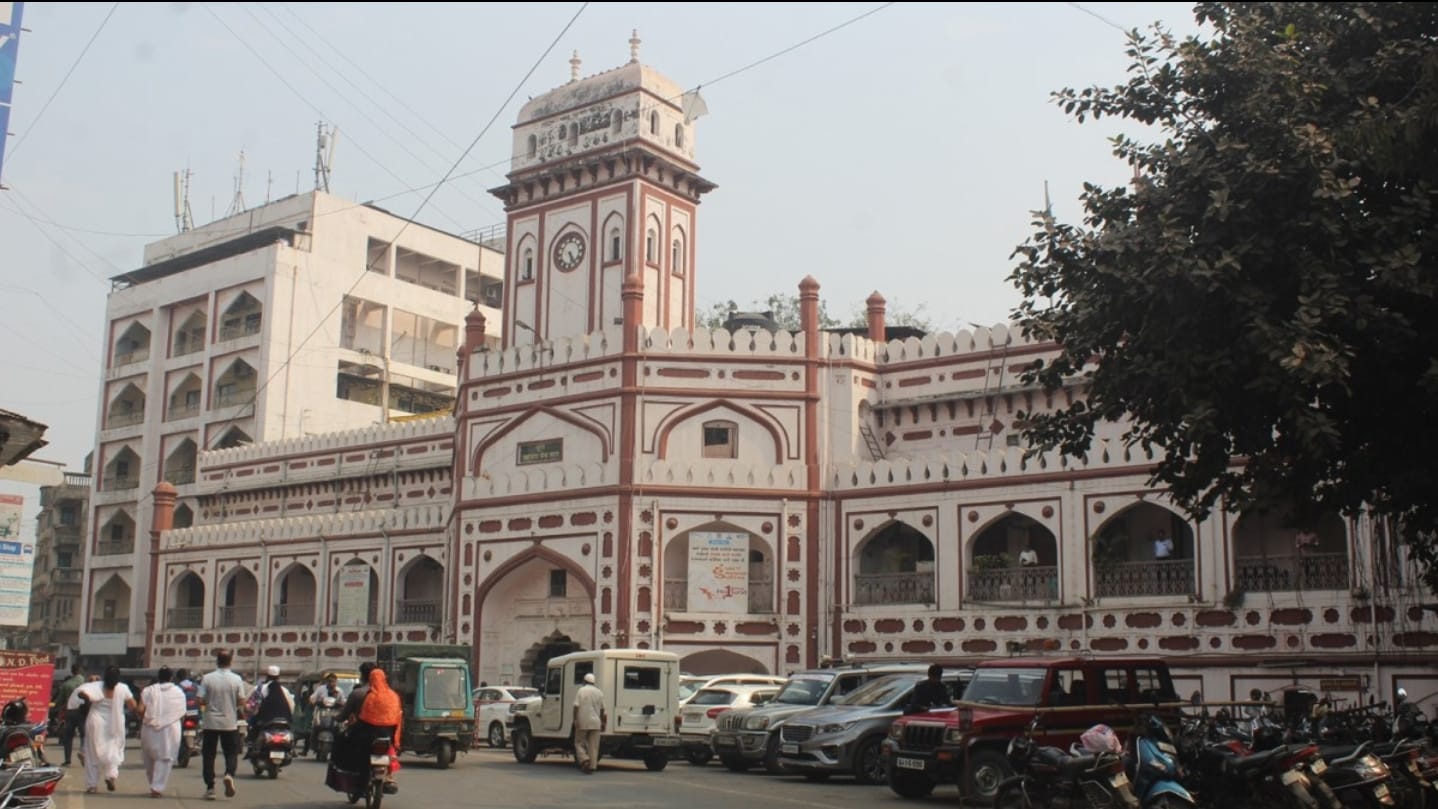
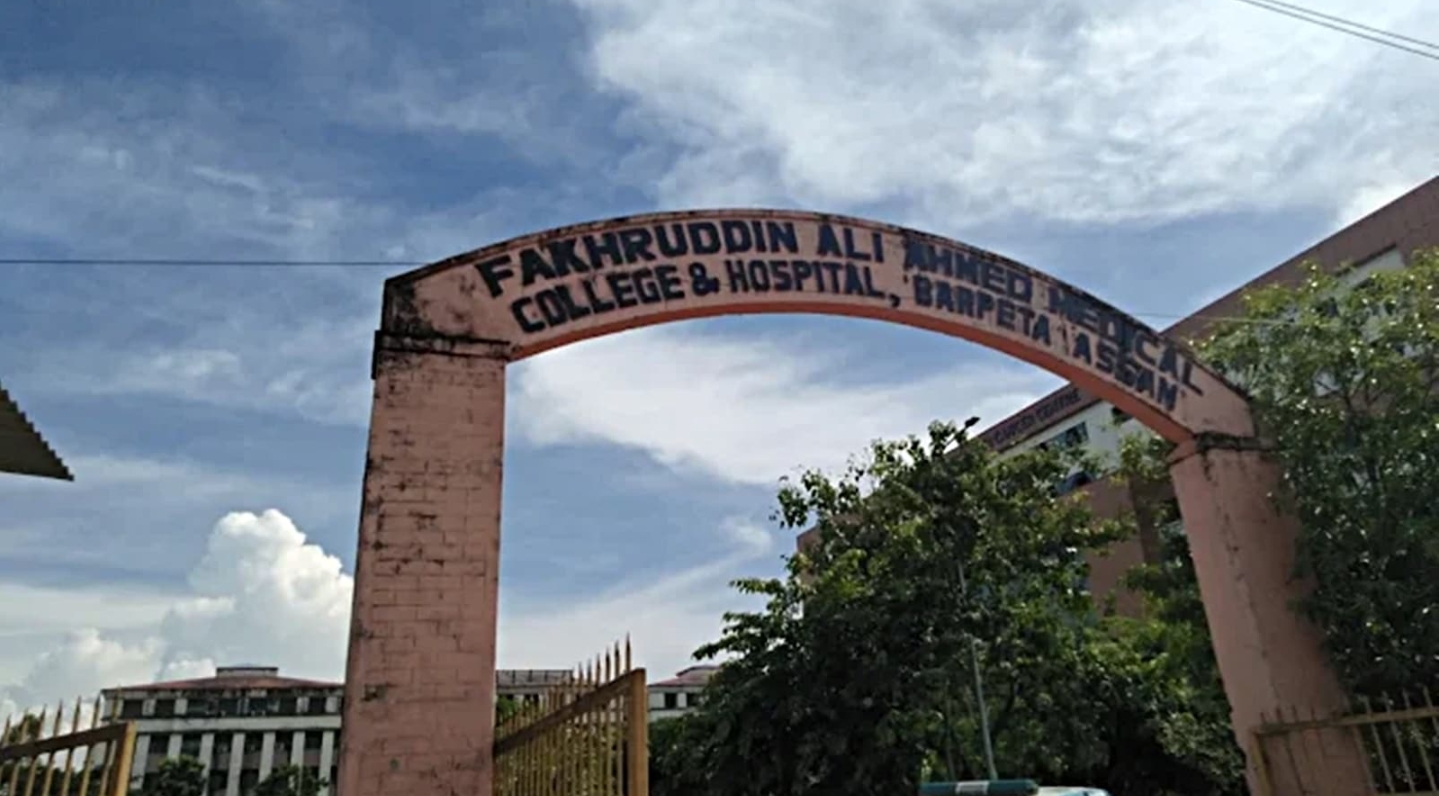
Across India, a new pattern has quietly taken hold in public life: the renaming of places, institutions, and streets associated with the Muslim past. What might appear on the surface as an administrative exercise or an act of cultural correction often carries deeper political symbolism. Recently, the civic body office in Surat located in the historic Mughal-era Muglisara building was renamed Tapti Bhavan, while the surrounding locality of Muglisara was proposed to be called Tapipura. Around the same time in Assam, the government led by Himanta Biswa Sarma decided to remove the name of former Indian President Fakhruddin Ali Ahmed from a medical college in Barpeta.
Such developments are not isolated events. They are part of a broader phenomenon unfolding across the country: the systematic reconsideration and, in many cases, removal of names associated with Muslim rulers, leaders, or historical figures from public spaces.
The argument offered in favour of these changes is usually framed in terms of “correcting history,” reclaiming indigenous heritage, or removing what is described as the legacy of foreign rule. But a closer examination raises a larger question: can renaming actually change history?
The simple answer is no. Names may change, but history does not disappear. In fact, attempts to erase historical memory often create a new layer of history, one that future generations may remember as a period of cultural insecurity and political exclusion.
The politics of memory
Every society struggles with its past. Nations constantly reinterpret their history, often according to the political and cultural needs of the present. Names of cities, roads, and institutions become symbolic battlegrounds in this process because they represent collective memory.
In India, this debate is particularly sensitive because the subcontinent’s history is deeply pluralistic. For nearly a thousand years, the region saw the coexistence and interaction of multiple civilisations: Hindu, Buddhist, Jain, Islamic, Sikh, and European. Architecture, language, music, cuisine, and administrative systems evolved through these interactions.
The Mughal Empire, which ruled large parts of the subcontinent from the sixteenth to the eighteenth century, left behind an enormous cultural and architectural legacy. Cities such as Delhi, Agra, Lahore, and Surat bear the imprint of Mughal urban planning and architecture. Many sarais (rest houses), forts, mosques, gardens, and marketplaces were built during this period.
The Muglisara building in Surat is one such example. Sarais were not merely inns for travellers; they were an essential part of trade routes that connected cities across the empire. Surat itself was one of the most important port cities of the Mughal period, linking India with Persia, Arabia, and Europe.
When such structures are renamed without acknowledging their historical context, the act raises concerns about how a society chooses to remember or forget its past.
A long list of renamed places
The renaming trend is not limited to one or two examples. Over the past decade, several prominent cities, railway stations, and streets have undergone name changes.
Allahabad was renamed Prayagraj. Faizabad district became Ayodhya district. The historic Mughal-era city of Aurangabad in Maharashtra was renamed Chhatrapati Sambhajinagar. The Mughal Sarai railway station in Uttar Pradesh was renamed Deen Dayal Upadhyay Junction.
Each of these changes has its own political and cultural justification. Supporters argue that these names reflect older indigenous traditions or honour national figures. Critics, however, see a pattern: many of the replaced names belonged to the Indo-Islamic period.
What makes the debate more complex is that these names themselves were part of historical evolution. Cities and regions across India have been renamed multiple times over centuries by different rulers. Yet earlier changes usually reflected administrative shifts rather than attempts to erase an entire cultural chapter.
The case of Fakhruddin Ali Ahmed
The decision in Assam to remove the name of Fakhruddin Ali Ahmed from a medical college adds another dimension to the debate. Ahmed served as the fifth President of India from 1974 until his death in 1977. He remains the only Muslim President after Zakir Husain.
His presidency was controversial because he signed the proclamation of Emergency in 1975 under Prime Minister Indira Gandhi. Critics often cite this as a failure of constitutional responsibility. Yet his role in Indian politics predates the Emergency by decades. He was a freedom fighter, a member of the Constituent Assembly, and a long-time parliamentarian.
Renaming an institution that carried his name, therefore, raises questions about how societies evaluate historical figures. Should one controversial decision define an entire legacy? Or should the broader context of a person’s life and contributions be considered? These questions are not unique to India. They are part of a global debate about how nations remember their past.
History cannot be erased
Attempts to erase or rewrite history have appeared in many countries. Yet experience shows that such efforts rarely succeed.
One of the most famous examples comes from ancient Egypt. Pharaoh Akhenaten attempted to eliminate the worship of traditional Egyptian gods and imposed a new monotheistic religion centred on the sun disk Aten. After his death, subsequent rulers tried to erase his memory by removing his name from monuments and inscriptions.
Despite these efforts, historians eventually reconstructed his story through archaeological discoveries. Today Akhenaten is recognised as one of the most fascinating figures in Egyptian history precisely because of those attempts to erase him.
Another example comes from the Roman Empire. After the death of certain unpopular emperors, the Senate sometimes declared a “damnatio memoriae,” a condemnation of memory. Statues were destroyed and names were removed from inscriptions. Yet modern historians have reconstructed their lives through surviving documents and ruins.
Closer to modern times, the Soviet Union frequently renamed cities and streets to reflect political ideology. The city of St Petersburg became Petrograd, then Leningrad after the Bolshevik Revolution. After the collapse of the Soviet Union in 1991, the city returned to its original name. But the Soviet chapter of history did not vanish simply because the name changed.
Germany provides another example. After World War II, the country removed many Nazi symbols and names from public spaces. Yet Germany did not attempt to erase the history of Nazism from textbooks. On the contrary, German education emphasises the study of that period to ensure that its mistakes are remembered.
These cases show a common pattern: renaming may alter public symbols, but it cannot erase historical reality.
The risk of selective memory
When societies focus only on certain aspects of history while ignoring others, they risk creating a selective memory. Such an approach may offer short-term political satisfaction, but it often leads to deeper divisions in the long run.
India’s historical narrative is extraordinarily complex. Muslim rulers built mosques and forts, but they also patronised Sanskrit scholars, translated Hindu texts into Persian, and employed Hindu generals and administrators. Similarly, many Hindu rulers patronised Persian literature and adopted administrative practices introduced during the Islamic period.
The Indo-Islamic civilisation that emerged over centuries was not a simple story of conquerors and victims. It was a process of cultural interaction that shaped everything from architecture to language. Urdu, Hindustani classical music, and even many culinary traditions grew out of this interaction.
When modern politics reduces this long history to a single narrative of conflict, it risks oversimplifying the past.
Renaming as political symbolism
For governments, renaming places can be a powerful symbolic act. It signals a shift in cultural priorities and communicates a message to supporters.
However, symbolism also carries consequences. If a particular community repeatedly sees its historical presence removed from public spaces, it may feel that its place in the national narrative is being questioned.
Public memory plays a crucial role in shaping national identity. Inclusive societies usually acknowledge the contributions of multiple communities rather than privileging one historical narrative over others.
The historian’s perspective
Professional historians generally approach the past differently from political actors. Their goal is not to glorify or condemn entire periods but to understand them in context.
Most historians agree that the Mughal period was neither a golden age nor an unmitigated era of oppression. It was a complex chapter of Indian history that produced remarkable cultural achievements while also reflecting the political realities of its time.
Similarly, historical figures are rarely entirely virtuous or entirely villainous. They are shaped by the circumstances of their era. When modern debates attempt to reduce historical complexity to simple moral judgments, they often distort the past.
What renaming actually creates
Ironically, attempts to erase historical names often end up creating new historical records of their own. Renaming places in India: why changing names of Mughal-era sites and institutions cannot erase history
Future historians studying the early twenty-first century in India may note that this period witnessed a wave of renaming aimed at redefining cultural identity. These decisions themselves will become part of history.
Just as historians today study the political motivations behind colonial naming practices, scholars in the future may examine the motivations behind contemporary renaming movements. In that sense, each name change adds another chapter to the story rather than closing the previous one.
A question for the future
The debate over renaming places and institutions ultimately reflects a deeper question: how should societies deal with uncomfortable parts of their history? One option is erasure. Another is engagement.
Erasure attempts to remove reminders of the past. Engagement, on the other hand, seeks to understand history in its full complexity and learn from it.
Countries that adopt the second approach often develop stronger democratic cultures because they encourage critical thinking about history rather than suppressing it.
India’s own civilisation has long been built on the idea of pluralism. From the dialogues of medieval Sufi and Bhakti thinkers to the secular ideals of the freedom movement, many of the country’s greatest intellectual traditions emphasised coexistence rather than exclusion.
Names change, history remains
The renaming of Muglisara in Surat or the removal of Fakhruddin Ali Ahmed’s name from a medical college may alter administrative records. New signboards will appear, and official documents will adopt the revised terminology. But the historical layers beneath those names will remain intact.
The Mughal sarai in Surat will still be a Mughal-era structure regardless of what it is called. Fakhruddin Ali Ahmed will still be remembered as India’s fifth President regardless of whether a college bears his name.
History has a stubborn memory. It survives in archives, monuments, literature, and collective consciousness. If anything, attempts to erase it often make people more curious about what is being hidden.
And that curiosity ensures that history continues to live on, long after the signboards have changed.

