

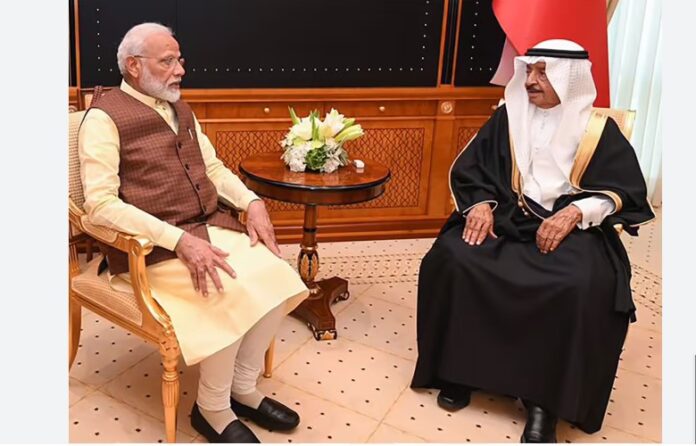
A detailed dialogue on security and infrastructure protection
Strengthening bilateral relations, Prime Minister Narendra Modi of India held an important conversation with King Hamad Bin Isa Al Khalifa of Bahrain on Friday. The discussion, which primarily revolved around regional developments in West Asia, took a serious tone as both leaders condemned recent attacks on critical infrastructure and emphasized the necessity of safeguarding global shipping routes. This dialogue underscores not only the intricate ties between the two nations but also highlights a growing concern over regional stability and security.
During this telephonic conversation, Prime Minister Modi expressed his warm regards to King Hamad and the people of Bahrain, coinciding with the auspicious occasion of Eid al-Fitr. This festive greeting set a positive tone for the discussion, which quickly pivoted to the pressing issues facing the West Asian region. With tensions rising, particularly around energy and civilian infrastructure, both leaders conveyed their shared apprehensions about the ongoing crises that could potentially disrupt global markets.
The recent spate of attacks targeting both vital energy infrastructure and civilian facilities in West Asia has raised alarms in the international community. These incidents have significant implications for global food security, fuel availability, and fertilizer distribution, which are all crucial to sustaining economies worldwide. Modi stated, “We discussed the current situation in the West Asian region and condemned attacks on the energy and civilian infrastructure,” outlining the adverse effects these violations could impose on global markets.
As trade routes in the region become increasingly endangered, the conversation also pivoted towards maritime security. Prime Minister Modi reaffirmed the importance of ensuring freedom of navigation in the Arabian Sea and adjacent waters. “Reiterated the importance of ensuring freedom of navigation and keeping shipping lines open and secure,” he stated, emphasizing the significant role that the safety of these routes plays in maintaining international trade and economic stability.
The background of this discussion is vital for understanding the broader context. The West Asian region has been experiencing escalating tensions due to various geopolitical factors, including conflicts in neighboring countries and the recent increase in hostile activities that threaten energy supply chains. Such instability not only affects the nations directly involved but also has ripple effects that can disrupt global economies.
Further complicating matters, the Indian community residing in Bahrain plays a critical role in the local economy, contributing to various sectors, including healthcare, education, and technology. Modi did not overlook this aspect of their bilateral relations, thanking King Hamad for his unwavering support for the Indian expatriate community in Bahrain. “Thanked His Majesty for his continued support for the well-being of the Indian community in Bahrain,” he noted, showcasing the importance of people-to-people connections in fostering robust diplomatic relations.
As India continues to strengthen its strategic partnerships across the globe, dialogues such as this one with Bahrain are essential for navigating the complexities of regional security and economic stability. Bahrain, a key ally in the Gulf region, offers India not only access to vital trade routes but also serves as a strategic partner in addressing common challenges like terrorism and energy security.
Why are these discussions significant? The increasing volatility in West Asia has far-reaching implications for global economic dynamics. With energy prices and shipping costs continuing to fluctuate due to instability, nations are under pressure to collaborate in ensuring security and stability in the region. Moreover, the importance of a united front against external threats emphasizes a shared responsibility in maintaining peace and order.
What’s more, India’s role in the Gulf region has been evolving, marked by an increasing engagement that goes beyond trade and economic cooperation, including strategic security dialogues to counter potential threats. This conversation with Bahrain is emblematic of India’s proactive approach in fostering relationships that not only aim to safeguard its economic interests but also address broader regional challenges.
As we look ahead, the need for comprehensive strategies to secure maritime routes and protect key infrastructure in West Asia becomes ever more critical. Both India and Bahrain recognize that collaboration is key to mitigating risks associated with geopolitical tensions, ensuring a safe environment for trade and commerce.
Broader implications: the future of Indo-Bahraini relations
Looking forward, the implications of this dialogue extend beyond immediate concerns. The relationship between India and Bahrain can serve as a model for similar partnerships in the region, where proactive diplomacy and mutual understanding can lead to enhanced security and economic stability. The commitment shown by both leaders to address these significant challenges accentuates the importance of cooperative frameworks in an increasingly interconnected global landscape.
As tensions continue to rise in West Asia, it will be interesting to observe how India and Bahrain, alongside other regional partners, navigate these troubled waters. Their strategic dialogue can help pave the way for collaborative solutions that ensure the safety of critical infrastructure and the uninterrupted flow of trade across vital maritime routes.

