



Indian Navy’s Latest Display of Power Signals Firm Stand Against Regional Threats
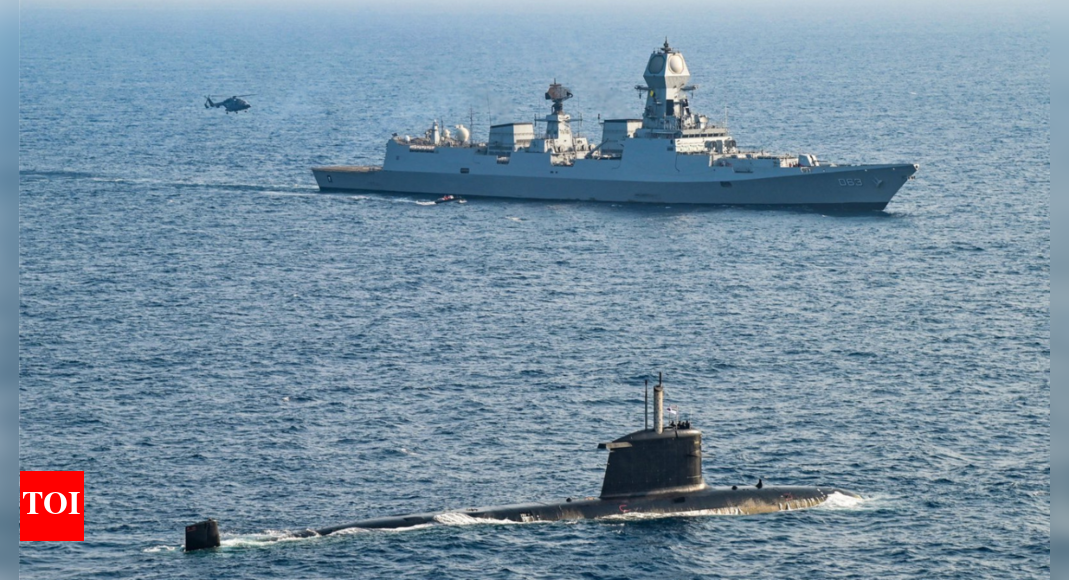
In a time of escalating tensions between India and Pakistan, the Indian Navy has showcased its naval prowess by sharing a striking image depicting the “trident of Naval power.” This image, shared on Saturday, features a highly versatile combination of a surface ship, a submarine, and a helicopter, seamlessly embodying the Navy’s operational capabilities. The Indian naval forces aim to highlight their readiness and strength amid rising geopolitical tensions, particularly in response to recent incidents along the Line of Control in Jammu and Kashmir.
The striking visual shared by the Indian Navy displays the destroyer INS Kolkata, a Dhruv Advanced Light Helicopter (ALH), and a Scorpene-class submarine. The caption of the post reads, “The trident of Naval Power – Above, below and across the waves,” emphasizing the multi-dimensional capabilities of the Navy that are critical in safeguarding national interests. The Indian Navy’s use of social media to convey such a message underscores its intent to maintain a strong presence and deter any hostile actions from adversarial forces.
The current backdrop for this display of military might is significant; it coincides with increased tensions following a deadly terrorist attack that occurred in Pahalgam, Jammu and Kashmir, on April 22. This tragic incident has prompted India’s government to assertively address perceived threats from across the border. In response, India has implemented several diplomatic measures aimed at Pakistan, including the suspension of the Indus Waters Treaty, closure of the operational land border crossing at Attari, revocation of visas for Pakistani nationals, and a downgrading of diplomatic ties. Prime Minister Narendra Modi has been vocal about his commitment to ensure that “perpetrators and conspirators” of such attacks face the “harshest response.”
The Indian Navy has been actively engaged in conducting extensive drills in the Arabian Sea as an indication of its readiness to confront any potential threats. According to sources within the defense establishment, naval warships have been deployed and are on high alert. Recently, multiple anti-ship and anti-aircraft exercises have been performed to showcase combat readiness and reinforce deterrence in the region. As per the report by[The Times of India](https://timesofindia.indiatimes.com), these measures underline the Navy’s commitment to protect India’s maritime interests during a period marked by regional instability.
Strategic Importance of Naval Preparedness
The Indian Navy’s readiness is not just about displaying military strength; it plays a vital strategic role in ensuring the security of India’s maritime borders. The Indian Ocean region is critical for trade and security, with vital shipping lanes that are essential for economic stability. Given the region’s increasing militarization and the growing influence of other nations, it is paramount for India to maintain a robust naval presence to protect its interests.
The trident depicted in the Indian Navy’s post symbolizes comprehensive capability. The INS Kolkata is known for its advanced sensors and weapon systems, making it a formidable presence on the high seas. The Scorpene-class submarine adds a layer of stealth and underwater warfare ability, crucial for surprise operations and intelligence gathering. Meanwhile, the Dhruv ALH, despite being grounded for safety checks, demonstrates the Navy’s flexibility to deploy air power in coordination with naval operations.
The combined capability of these platforms reflects a modern approach to naval warfare, emphasizing joint operations among different arms of the military. The integration of surface, air, and underwater capabilities is pivotal in achieving maritime security, providing a mechanism to deter external aggression and respond effectively to threats.
Need for Vigilance in the Indian Ocean Region
The Indian Navy’s operational readiness and vigilance have become even more critical as geopolitical scenarios evolve in the Indian Ocean region. The rising maritime ambitions of neighboring countries have raised concerns in India. Actions such as the development of port facilities by foreign powers in the region have prompted India to enhance its naval capabilities.
The current phase of heightened naval activity also coincides with various international maritime exercises, alliances, and strategic partnerships that India has entered into over the years. These collaborative efforts underline the importance of collective maritime security, particularly with allies in the region. India’s participation in joint exercises with the United States, Japan, and Australia has further solidified its position as a key player in ensuring a free and open Indo-Pacific.
In light of all these developments, the Indian Navy’s portrayal of its “trident of naval power” serves not only to reinforce its readiness but also to communicate a strong message of deterrence to potential adversaries. This proactive approach is essential not only for national security but also for the stability of the broader Indo-Pacific region.
Future Directions for the Indian Navy
As the Indian Navy navigates through these challenges, several strategic initiatives are anticipated in the coming years. The focus will likely shift towards enhancing indigenous capabilities through the ‘Make in India’ program, aiming to bolster domestic defense manufacturing. The ongoing procurement of advanced vessels, submarines, and aircraft is central to these plans, aimed at achieving self-reliance in defense.
Furthermore, with India increasingly playing a crucial role in regional security dialogues, there is a growing emphasis on partnerships with like-minded nations. Collaborative efforts to secure maritime commons and address non-traditional security challenges, such as piracy and climate change, are set to feature prominently in future strategies.
In conclusion, the Indian Navy’s demonstration of its a “trident of naval power” amidst ongoing tensions with Pakistan symbolizes not only military readiness but also the commitment to safeguarding the nation’s maritime interests. As global maritime dynamics continue to evolve, the Navy’s proactive stance is essential in ensuring both national security and regional stability.
For more insights on India’s naval capabilities, check out our articles on[Maritime Strategy](https://example.com/maritime-strategy) and[Defense Partnerships](https://example.com/defense-partnerships).