

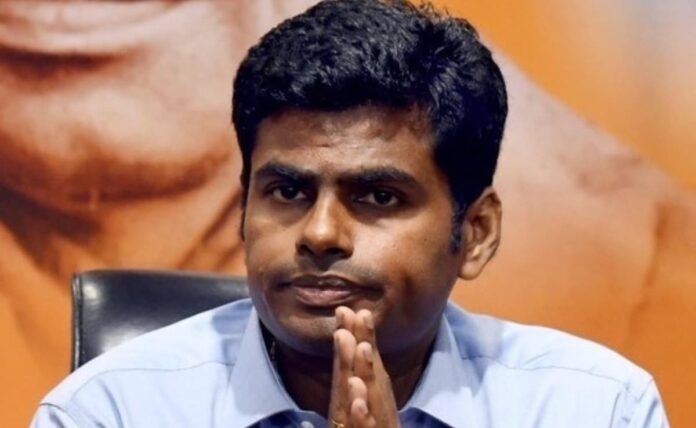
Chennai’s Political Landscape Changes: K Annamalai’s Leadership Under Scrutiny
Recent statements from K Annamalai, the current president of the Tamil Nadu Bharatiya Janata Party (BJP), have sparked speculations about his potential exit from the party’s top position. As the political climate heats up ahead of the upcoming Tamil Nadu Assembly elections, Annamalai asserted that he is “not in the race to become the next president” of the Tamil Nadu BJP while addressing media in Coimbatore. This declaration comes at a time when there are intense discussions about the future of the party in Tamil Nadu, particularly concerning alliances and leadership positions.
The speculation regarding Annamalai’s removal can also be traced back to the requests from AIADMK chief Edapaddi K. Palaniswami. Reports have indicated that Palaniswami has made it a precondition for any future alliance with the BJP that Annamalai must be replaced. Tensions have arisen following Annamalai’s criticisms of AIADMK leaders, which were significant factors in the BJP-AIADMK partnership falling apart earlier this year. This shift in alliances and leadership dynamics is crucial as the elections loom, and both parties seek a strategic advantage.
In addition to internal party dynamics, Annamalai’s leadership has been marked by his unyielding stance against the ruling Dravida Munnetra Kazhagam (DMK). His tenure, which began in 2021, has been characterized by efforts to elevate the party’s visibility in a state where the BJP has historically struggled to gain a foothold. Despite not achieving significant electoral victories during his term, Annamalai’s direct approach and public protests have garnered attention, signaling a new, albeit challenging, phase for the BJP in Tamil Nadu.
What Lies Ahead for K Annamalai and the BJP?
Annamalai’s future role is being deliberated by party leaders, with sources indicating that any suggestion of his removal would be framed as a strategic move to enhance the BJP’s presence in Tamil Nadu rather than a penalty for his past actions. Observers note that similar transitions have occurred within the party, such as Annamalai’s predecessor, L. Murugan, who ascended to a Union ministerial role after stepping down from the Tamil Nadu chief position.
The ongoing negotiations between Palaniswami and senior BJP officials, including Union Home Minister Amit Shah, underscore the urgency of reaching a consensus. As Palaniswami has made it clear that Annamalai’s exit is a non-negotiable condition for re-establishing an alliance, it puts immense pressure on both the BJP and Annamalai himself. This pressure is compounded by factional interests, particularly concerning caste dynamics, as both Annamalai and Palaniswami hail from the influential Gounder community. The BJP might aim to balance these interests to position themselves more favorably in the imminent elections.
Looking ahead, Palaniswami is anticipated to meet Prime Minister Narendra Modi during an official visit to Tamil Nadu on April 6, where further alliance discussions will unfold. The outcomes of these talks are critical, as they could set the tone for the BJP’s strategy in the state moving forward and determine whether Annamalai continues to play a leading role or steps back.
The Broader Implications of Leadership Changes in Tamil Nadu’s BJP
K Annamalai’s bold approach and willingness to tackle sensitive issues have made him a notable figure in Tamil Nadu’s political landscape. His high-profile protests, particularly a dramatic self-flogging incident meant to highlight social injustices, have drawn national attention. This has resonated with many constituents, making him a polarizing figure. The way his leadership is perceived—whether as an asset to the BJP’s visibility in Tamil Nadu or as a liability that complicates alliances—will have lasting implications for the party’s electoral strategy.
While Annamalai’s presence has increased awareness of the BJP within the state, it has not translated into substantial electoral success. Many constituents see the BJP as a party that has historically struggled to navigate the complex sociopolitical fabric of Tamil Nadu. If Annamalai is replaced, it may pave the way for a more conciliatory leader who could foster better relations with potential allies like AIADMK and other regional parties.
As the clock ticks down to the Tamil Nadu Assembly elections, the BJP’s strategy will be pivotal. The outcome of the party’s internal deliberations and external alliance-building efforts will significantly influence its political future in a state that has largely remained resistant to its national prominence.
For ongoing updates about Tamil Nadu’s political developments, visit[News18](https://www.news18.com/) and[The Hindu](https://www.thehindu.com/).
In conclusion, the fate of K Annamalai and the direction of the Tamil Nadu BJP are intertwined with the expansive landscape of regional politics. Party dynamics, alliances with regional players, and perceptions of leadership will all play crucial roles as the party steers through the challenges ahead. As discussions progress and political maneuvers unfold, the Tamil Nadu BJP stands at a pivotal crossroads.
DISCLAIMER
We have taken every measure to ensure that the information in this article and on our social media platforms is accurate, verified, and obtained from reliable sources. For feedback or complaints, please contact us at info@hamslive.com.

