

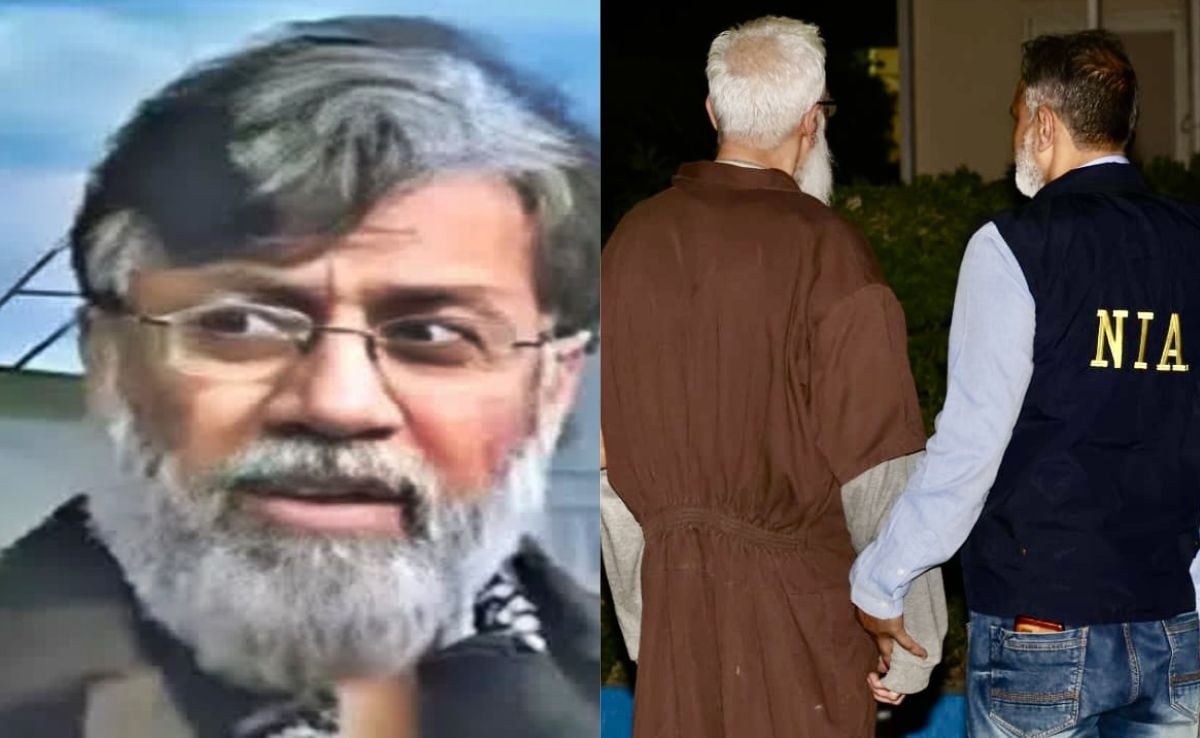


NIA Gathers Evidence Against Extradited Businessman in Terror Case
In a significant development in the ongoing investigation of the 26/11 Mumbai terror attacks, the National Investigation Agency (NIA) has taken Pakistani-Canadian businessman Tahawwur Rana into custody following his extradition from the United States. The NIA is considering collecting Rana’s voice sample to corroborate call records that may link him to the planning and execution of the attacks that resulted in the loss of 166 lives in Mumbai.
This crucial investigation, which could shed light on Rana’s alleged involvement in the attacks, raises many questions: Who is Tahawwur Rana? What role did he play in the 26/11 attacks? Where is he currently being held? When did these developments take place? Why is the collection of his voice sample seen as critical? And how will the NIA proceed if he refuses to cooperate?
Rana has been detained at the NIA headquarters in New Delhi since arriving from the U.S. on Thursday. The NIA aims to interrogate him regarding his interactions with a man he met in Dubai right before the terrorist incident. Notably, the NIA suspects that Rana’s immigration agency office in Mumbai, which was not renewed, served as a cover for David Headley, a key figure in the attacks, who conducted reconnaissance on several potential targets including hotels and public spaces in the city.
Potential Evidence and Interrogation Process
The NIA plans to request Rana’s voice sample to match it with recorded calls that allegedly include instructions related to the November 2008 attacks. The success of this endeavor hinges on Rana’s consent; if he chooses to refuse, the agency can seek court permission to proceed. Interestingly, his refusal to provide a sample will be documented in the chargesheet, potentially complicating his legal standing during the trial.
Once granted permission, experts from the Central Forensic Science Laboratory (CFSL) will be dispatched to the NIA headquarters to collect the voice samples in a soundproof environment, ensuring the accuracy and reliability of the data gathered.
The interrogation process, which is projected to last for 18 days, is focused not only on Rana’s actions but also on the potential involvement of other significant figures in the planning of the attacks. Key individuals such as Zakiur Rehman Lakhvi and Sajid Majeed Mir are under scrutiny, and their connections to Rana will be carefully examined.
Background on Tahawwur Rana
Rana, a former member of the Pakistan Army Medical Corps, has claimed to be unable to recall specific details from the time leading up to the attacks. However, he has acknowledged being in Mumbai at least a week prior to the heinous acts. Throughout Day 1 of his interrogation, he reportedly exhibited a lack of cooperation, providing limited insight into his activities and their relation to the attacks.
Rana’s early life, education, and subsequent immigration to Canada with his wife are also under investigation, particularly how these experiences may have intertwined with his alleged collaboration in the acts of terrorism that shook the nation. The NIA’s examination of Rana’s historical background will be pivotal in identifying any pre-existing connections to the perpetrators of 26/11.
Territorial and Legal Implications
The NIA’s inquiry into Rana’s role has broader implications beyond the individual case. Investigators are keen to understand the operational lines between various Pakistani nationals involved in the attacks, including Ilyas Kashmiri and Abdur Rehman. The agency anticipates that Rana’s information could offer vital leads in piecing together the intricate web of coordination behind the militant operations.
As per the report by The Hindu, the investigation is not only about holding Rana accountable but also about unraveling the larger network of terror that extends into Pakistan, shedding light on the supportive structures that allow such attacks to be orchestrated.
The urgency and seriousness of this investigation underscore how the 26/11 attacks still reverberate in the collective memory of the nation. The NIA’s comprehensive approach seeks to ensure that justice is served not just for the victims of this tragedy but also to prevent future occurrences.
The Path Forward: Crucial Steps Ahead
The NIA faces considerable challenges ahead as they continue their investigation into one of the most infamous terrorist attacks in Indian history. The agency must carefully gather evidence, navigate legal proceedings, and remain vigilant against any potential obfuscation from Rana.
This investigation is not only about securing a conviction but also about understanding how such complex terror plots are devised and executed. The implications of Rana’s testimony and any corroborative evidence he provides may hold the key to dismantling the organizations behind these attacks.
As the NIA moves forward, the nation remains cautiously optimistic that justice will ultimately be served as they delve deeper into the past, aiming to bring light to the shadows that linger since that tragic November night in 2008.
For more detailed insights on the repercussions of the 26/11 attacks, explore our articles on terrorism in India and the evolving strategies of national security in the region.
DISCLAIMER
We have taken every measure to ensure that the information in this article and on our social media platforms is accurate, verified, and obtained from reliable sources. For feedback or complaints, please contact us at info@hamslive.com.