

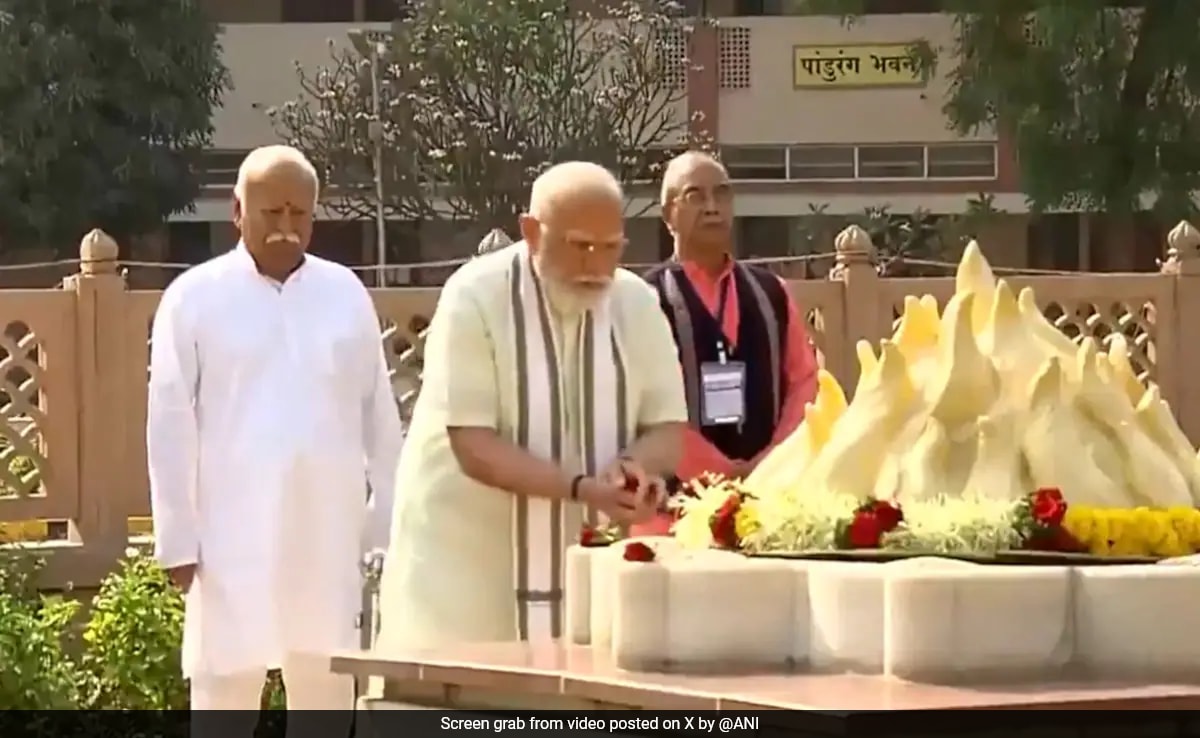


PM Modi ‘s Tribute to Cultural Icons at Reshimbagh Amid Celebrations
On a momentous Sunday, Prime Minister Narendra Modi made a significant visit to Nagpur, where he paid heartfelt tributes at the Dr. Hedgewar Smruti Mandir. This memorial honors the pivotal figures of the Rashtriya Swayamsevak Sangh (RSS), including its founder, Keshav Baliram Hedgewar, and the second ‘sarsanghchalak’ (chief), M. S. Golwalkar. The occasion coincided with the Sangh’s Pratipada program, which marks Gudi Padwa, the commencement of the Hindu New Year, thus adding cultural significance to his visit.
In attendance alongside PM Modi were prominent personalities such as RSS chief Mohan Bhagwat, former general secretary Suresh Bhaiyyaji Joshi, Maharashtra Chief Minister Devendra Fadnavis, and Union Minister Nitin Gadkari, both of whom hail from Nagpur. This visit is particularly noteworthy as it marks PM Modi’s first tribute at the Smruti Mandir since taking office as Prime Minister, a gesture with deep-rooted implications for both national pride and RSS values.
During the visit, PM Modi engaged with RSS officer-bearers at the Smruti Bhavan within the premises and expressed his reverence for the memorials, stating, “The memorial of the two strong pillars of RSS is an inspiration to lakhs of swayamsevaks who have dedicated themselves to the service of the nation.” He also described his overwhelming feelings about visiting such a significant site.
The Prime Minister’s message in the visitor book underscored his recognition of the values embodied by the RSS and its commitment to Indian culture, nationalism, and organization. He elaborated by saying that the memorial site serves as a reservoir of inspiration for those dedicated to the nation.
Cultural Significance and Legacy of the RSS Leadership
The visit to the Dr. Hedgewar Smruti Mandir is particularly symbolic. It is not just a tribute to past leaders but a reaffirmation of the ongoing legacy of the RSS in shaping national identity and cultural ethos. PM Modi’s emotional response highlights the importance of these figures in the framework of Indian society and their dedication to the service of the nation.
Moreover, the timing of this event—aligned with Gudi Padwa celebrations—reinforces the entwined relationship between culture, tradition, and national pride. As per reports from[The Times of India](https://timesofindia.indiatimes.com/), Gudi Padwa signifies the harvesting of crops and the arrival of spring, reflecting themes of renewal and festivity, which align with the memorial’s objectives of promoting cultural heritage.
Earlier in his career, Atal Bihari Vajpayee, a stalwart of the BJP and a significant influence on Modi’s path, visited the Smruti Mandir during his tenure as Prime Minister on August 27, 2000. Such tributes by national leaders not only remember the past but also galvanize support for the values these leaders stood for.
In addition to visiting the RSS memorial, PM Modi took time to honor the legacy of Dr. Babasaheb Ambedkar at Deekshabhoomi, a site of immense historical significance where Ambedkar embraced Buddhism in 1956. This dual homage reflects Modi’s strategy of connecting ideologies across different segments of Indian society, reinforcing the message of unity and diversity within the nation.
Engagements and Welcome in Nagpur
Upon his arrival in Nagpur, PM Modi was warmly welcomed by Chief Minister Devendra Fadnavis, Union Minister Nitin Gadkari, and state BJP chief Chandrashekhar Bawankule. The atmosphere was vibrant, showcasing Nagpur’s enthusiasm for their esteemed leader. Given that Nagpur is often regarded as the birthplace of the RSS, this visit served to solidify the connection between the city and the cultural nationalism espoused by the organization.
The tribute to RSS leaders not only reflects PM Modi’s respect for the organization but also bears political significance as the BJP gears up for upcoming elections. The visit may be perceived as a reinforcement of the BJP’s ideological foundation that resonates with many citizens across the country.
A Broader Perspective on Leadership and National Identity
PM Modi’s homage to past leaders and engagement with RSS members can be seen as an effort to connect contemporary political narratives with historical foundations. The memorials at the Dr. Hedgewar Smruti Mandir encapsulate the ethos of selfless service, national pride, and community engagement, which are central to the RSS’s philosophy.
As the Prime Minister accentuates these values, he not only honors the legacy of these stalwarts but also encourages a new generation to embrace such ideals. The location itself—Reshimbagh, the administrative headquarters of the RSS—adds layers to this narrative, emphasizing the importance of grassroots activism in shaping national discourse.
While some may critique the intertwining of politics and cultural heritage, the reality remains that these symbolic gestures resonate deeply with a significant demographic in India. The engagement fosters a sense of belonging and pride, crucial for a diverse nation like India where regional identities are often prominent.
For further exploration of the impact of RSS on Indian politics, readers can refer to[The Hindu](https://www.thehindu.com/) for comprehensive analyses, and for insights into Gudi Padwa’s cultural significance, visit[Cultural India](https://www.culturalindia.net/).
Prime Minister Modi’s visit to Nagpur is more than a ceremonial tribute; it is a reaffirmation of the values that shape India’s national identity. As he continues his outreach to diverse communities, the implications of such visits will likely resonate in the socio-political landscape of India for years to come.