

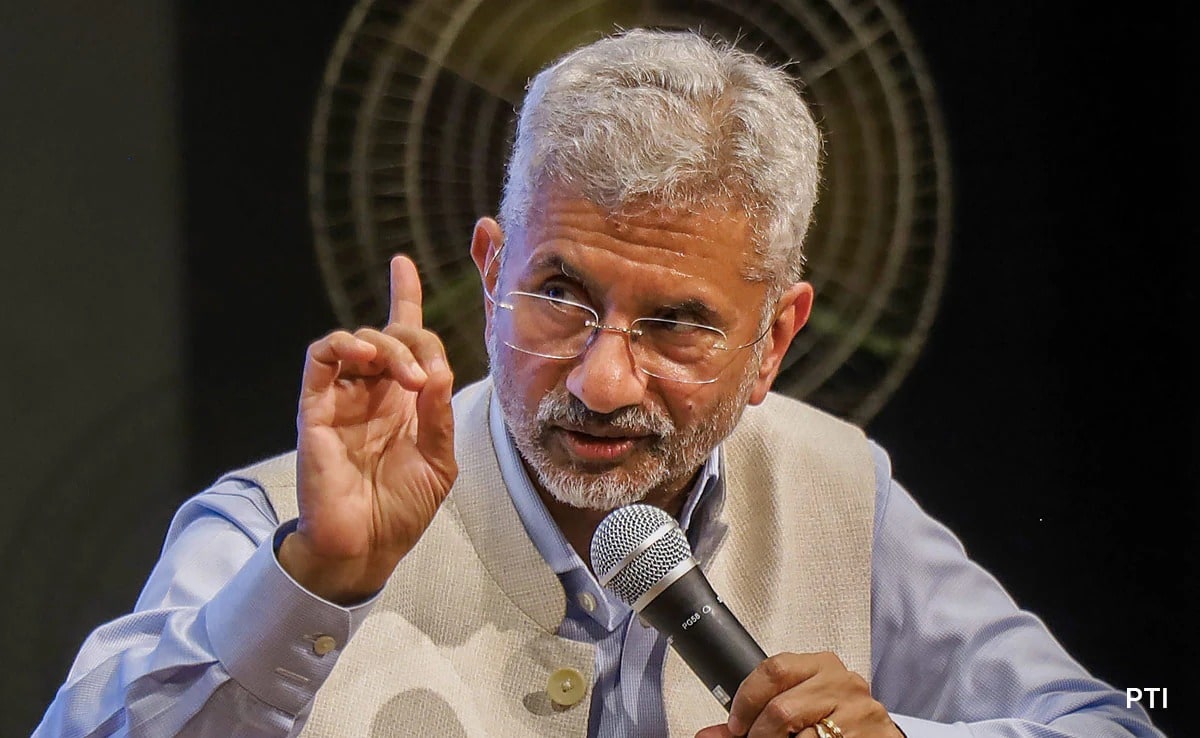


External Affairs Minister S Jaishankar Urges Delhi Voters to Rethink Government Choices as Polls Approach
In a significant pre-election statement, External Affairs Minister S. Jaishankar voiced his concerns over the lack of basic amenities in Delhi, criticizing the Aam Aadmi Party (AAP) for its governance over the past decade. As the assembly elections loom on February 5, Jaishankar’s assertions resonate strongly with voters who are increasingly aware of their rights—rights that he claims are not being met under the current administration. He made these remarks during an event titled ‘Viksit Delhi-Viksit Bharat’ with the South Indian community in the capital.
Jaishankar, expressing his disappointment, stated, “Whenever I visit foreign countries, I hide one thing from the world. I feel ashamed to go abroad and say that people living in the national capital do not receive basic amenities such as housing, gas cylinders, or piped water under the Jal Jeevan Mission.” His statement highlights a deep-rooted frustration with the existing governance and serves as a rallying cry for voters to reconsider their political choices. The elections are set against a backdrop of dissatisfaction with essential services like water, electricity, and healthcare, leading Jaishankar to call on voters to think about a change in leadership.
This critique comes at a pivotal moment as the electoral race heats up among the key political players in Delhi. With the AAP, Bharatiya Janata Party (BJP), and Congress vying for power, the stakes could not be higher. The upcoming assembly elections not only serve as a litmus test for the AAP’s governance but also for the opposition parties seeking to unseat them.
High Stakes Ahead: The Delhi Assembly Elections
The assembly elections in Delhi will determine the fate of 70 seats, with votes scheduled to be cast on February 5 and results to be announced shortly after on February 8. As the election date approaches, the political landscape is intensifying. AAP MP Sanjay Singh has exuded confidence, asserting that his party will secure an overwhelming majority, winning more than 60 of the 70 seats. Singh stated, “AAP will be winning more than sixty seats, and the Arvind Kejriwal-led government will be formed in Delhi with an absolute majority.” His declaration indicates a clear belief in the party’s grasp on the electorate, despite the criticisms levied by Jaishankar and others.
The tensions between the political parties are palpable. The AAP is running on a platform that emphasizes its achievements in areas such as education and healthcare, while the BJP is focusing on the failures of the AAP government to deliver basic services. Congress, for its part, is looking to regain its lost foothold in Delhi, which could reshape the political dynamics significantly.
Amidst these developments, Jaishankar also praised Prime Minister Narendra Modi’s leadership, remarking, “Ever since Narendra Modi became Prime Minister, the global perception of India has significantly shifted. While the global economy faces challenges, India continues to maintain a growth rate of six to seven percent.” This statement reinforces the connection between governance at the national level and the local issues affecting residents in Delhi.
The Broader Implications of Voter Choices in Delhi
Jaishankar’s comments are more than just an indictment of the AAP government; they reflect a broader narrative about governance and accountability. The rising costs of living and increasing dissatisfaction with basic services can lead to significant shifts in voting behavior. With only days left for voters to make their decisions, every statement from key political figures holds weight in shaping public opinion.
The battle lines are clearly drawn, and the electorate holds the power to decide the future direction of Delhi. As the city grapples with practical issues of living standards, healthcare access, and basic utilities, this election could be a turning point. The need for effective governance and service delivery has never been more critical as residents seek a government that prioritizes their livelihood and rights.
In this charged political atmosphere, the role of the electorate cannot be overstated. Educating oneself on the policies and performance of each party should be a priority for voters. It’s essential for voters to reflect on the implications of their choices, especially given the vital services that impact their daily lives.
For those interested in more information on the current political scenario in Delhi, refer to the related articles on the AAP’s educational initiatives and BJP’s manifesto.
Looking Ahead: The Path to a More Developed Delhi
As the assembly elections draw near, the future of Delhi remains uncertain. Will voters heed Jaishankar’s call for change, or will they reaffirm their support for the current government? The outcome of this election could significantly alter the course of governance in the capital, impacting issues ranging from infrastructure to health services.
For more insights into the election strategies of various parties, refer to the related articles that delve into the plans of the AAP and BJP. Additionally, for an in-depth look at electoral trends in Indian politics, consult external credible sources such as The Times of India and NDTV.
In a city as dynamic as Delhi, every vote counts, and the responsibility lies with the residents to ensure that their voices are heard and their needs met. As the election date approaches, the call for accountability grows louder, setting the stage for a potentially transformative electoral process. Will Delhi emerge with a new direction in governance, or will it continue on its current path? The answer awaits on February 5.