

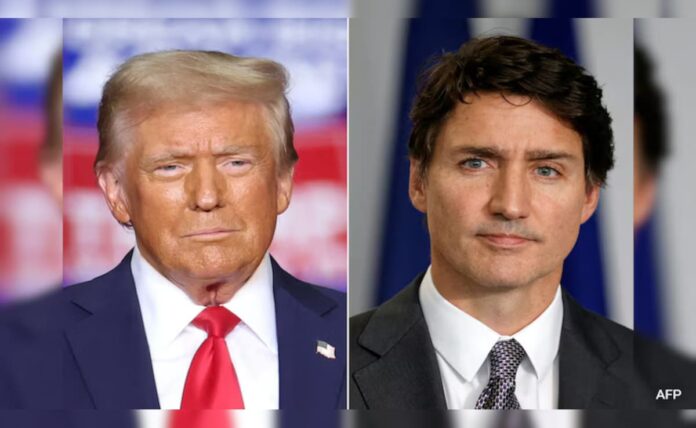
Political Maneuvers Amidst Trade Tensions: Who, What, Where, When, Why, and How
In a resolute response to President Donald Trump’s recent tariffs, both Canadian Prime Minister Justin Trudeau and Mexican President Claudia Sheinbaum have announced retaliatory measures aimed at safeguarding their national interests. This tit-for-tat strategy could significantly disrupt global supply chains and alter the flow of goods across North America. The tariffs, which affect approximately $155 billion in imports from the United States, will add pressure to the already fragile economic relationships among these neighboring countries.
The catalyst for this trade crisis emerged when President Trump imposed a sweeping 25 percent tariff on a vast array of goods imported from Canada and Mexico, with a caveat: Canadian energy products would only face a 10 percent duty. In his justification, Trump cited a “major threat” posed by illegal immigration and drug trafficking, which he claims necessitated the executive action. He invoked the International Emergency Economic Powers Act to implement these tariffs, positioning them as necessary to combat what he describes as a national emergency regarding drug-related issues, including the opioid crisis linked to fentanyl.
Canada’s response is immediate and strategic. Trudeau indicated that the implementation of the tariffs would occur in phases, with an initial $30 billion in tariffs effective immediately and the remainder to follow in 21 days. He stated, “We will not be pushed around by the U.S.” reinforcing the notion that Canada seeks to protect its interests against what it views as unjust economic measures.
Mexico, too, is not backing down. President Sheinbaum has directed her economy minister to activate “Plan B,” which incorporates both tariff and non-tariff measures. A critical aspect of this response is Sheinbaum’s strong rebuke to the U.S. government’s allegations regarding alleged alliances with drug-trafficking organizations, publicly rejecting what she called “slander” on social media platform X. This defiant stance highlights a growing tension in diplomatic relations between Mexico and the United States.
Understanding the Stakes
The trade landscape in North America is characterized by deep interdependencies, with U.S. imports from Canada and Mexico reaching nearly $900 billion in 2023. Canada’s economy is heavily reliant on exports to the U.S., accounting for approximately 80 percent of its total exports, which amounts to around $410 billion. Similarly, Mexico’s exports to the U.S. represented a staggering 84 percent of its global sales last year, reaching over $510 billion. Consequently, these retaliatory measures could lead to increased prices on everyday goods, such as avocados and tomatoes, that rely on agricultural imports from both Canada and Mexico.
In light of these developments, analysts are closely monitoring how this trade conflict unfolds, recognizing that the broader implications could affect not only the economies of the three countries but also international markets at large. As the White House prepares to impose tariffs on additional trading partners, including the European Union, the situation becomes even more precarious for businesses navigating a rapidly changing trade environment.
The Economic Ripple Effect
The introduction of tariffs has the potential to drive up prices across many sectors, particularly in agriculture. For instance, with over 80 percent of U.S. avocados sourced from Mexico, rising import costs could consequently inflate the price of guacamole, a staple in American households. Additionally, the agricultural landscape could face upheaval as Canadian and Mexican farmers react to these tariff-induced shifts, creating a cycle of economic strain that could touch every consumer.
Furthermore, the impact of tariffs is not limited to agricultural products. The White House has indicated a broader strategy targeting industries such as semiconductors, steel, aluminum, and energy. This sweeping approach to tariffs raises alarms within those sectors, where supply chains are already stretched thin due to previous trade disputes and the lingering effects of the global pandemic. Manufacturers in the U.S. who rely heavily on importing components may also see increased production costs, ultimately affecting the retail prices of consumer goods.
Industry experts are urging businesses to brace for volatility and consider diversification strategies to mitigate risks associated with tariff-induced price increases. Businesses may need to explore alternative suppliers or shift production lines to maintain a competitive edge and keep costs manageable.
Global Trade Negotiations in the Spotlight
These developments further complicate the already intricate web of global trade negotiations. As nations grapple with their economic strategies in response to U.S. tariffs, the likelihood of shifting alliances and trade agreements becomes increasingly plausible. The initial response from both Canada and Mexico suggests that they may pursue deeper cooperation in the face of mutual challenges, although how this evolves remains to be seen.
The use of tariffs as a tool of economic diplomacy has raised questions about the long-term viability of international trade agreements. Experts speculate that continued retaliatory measures could lead to a deterioration of trust and collaboration among nations, making it more challenging to address overarching global issues such as climate change and income inequality.
Both Trudeau and Sheinbaum seem committed to protecting their countries’ trade interests, signaling a potential realignment of economic strategies in North America. As they push back against U.S. tariffs, they may explore new partnerships and forge alliances with other nations affected by similar challenges. The outcome of these trade tensions will undoubtedly shape the future of international relations and economic policy for years to come.
By keeping a close watch on these developments, businesses, policymakers, and consumers can better prepare for the implications of ongoing trade tensions. The ramifications extend far beyond the immediate economic landscape, with the potential to influence geopolitical dynamics and shape the global marketplace.
For more insights into trade dynamics in North America, refer to the related articles on Hams Live News. Additionally, to explore more about the impacts of tariffs on global markets, check out the reports on BBC News and Reuters Markets.

