

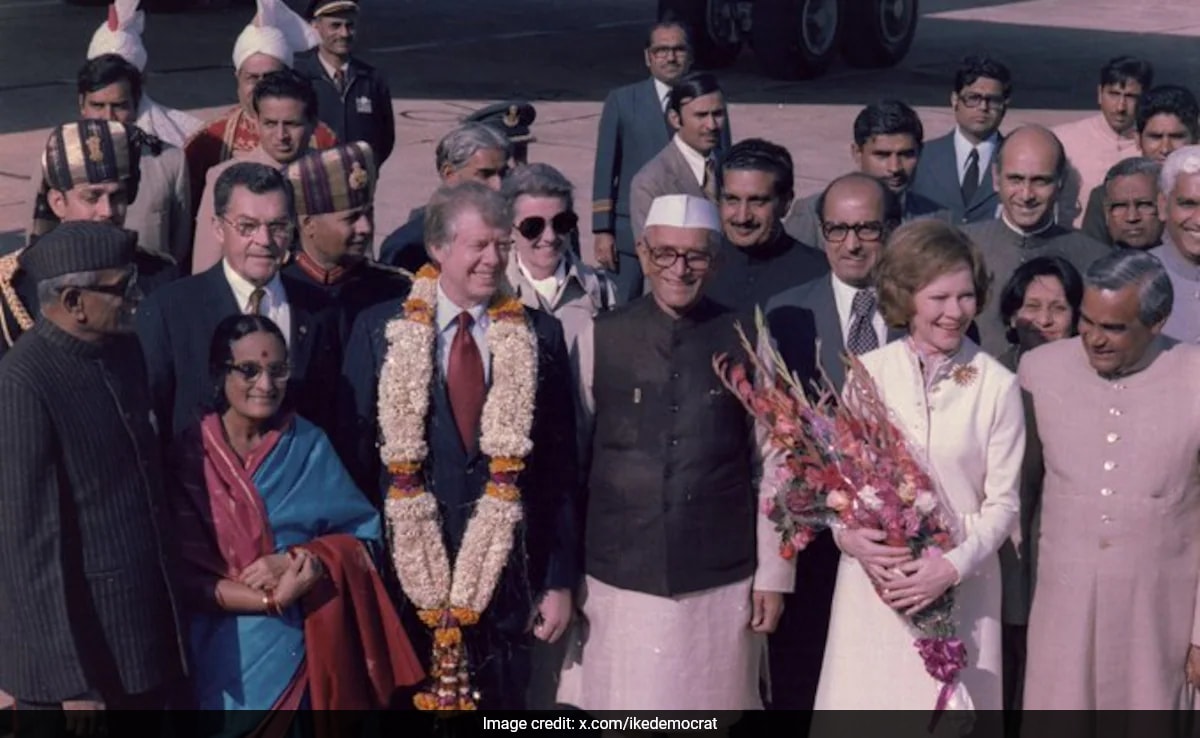


Haryana, India – The bond between two nations deepens with the profound legacy of former US President Jimmy Carter, who passed away on Sunday at the remarkable age of 100. One of the more unexpected tributes to his impact can be found in a remote village in Haryana called ‘Carterpuri.’ This unassuming village, situated just an hour’s drive from Delhi, became a symbol of honor and admiration for the former president following his visit in 1978.
Carterpuri: A Lasting Tribute to a Visionary Leader
Situated in the village of Daulatpur Nasirabad, ‘Carterpuri’ was awarded its name in recognition of President Carter’s visit on January 3, 1978. Together with former First Lady Rosalynn Carter, he traveled to the village, which was reeling from the impacts of social and political upheaval. As per the report by the Carter Center, the reception was overwhelmingly positive, prompting the villagers to rename their home in his honor. This affectionate gesture also initiated a lasting relationship between the village and the White House, with correspondence continuing throughout Carter’s presidency.
January 3 has since held a significant place in the hearts of the residents; the date was designated as a local holiday in Carterpuri. The impact of Carter’s legacy was palpable again in 2002 when he was awarded the Nobel Peace Prize. The villagers celebrated his accolade with grand festivities, showcasing their enduring respect and affection for a man they viewed as a champion of peace and democracy.
Carter’s visit occurred in a critical time for India as it was just a year after the end of the Emergency imposed by Indira Gandhi and the victory of the Janata Party. During his time in India, he addressed the Indian parliament, where he articulated a profound commitment to democratic values. “For the remainder of this century and into the next, the democratic countries of the world will increasingly turn to each other for answers to our most pressing, common challenge…” he remarked, outlining his vision for cooperation among democracies in the face of global challenges.
From Family Roots to Diplomatic Relations
The connection between Carter and India was not merely political but also deeply personal. His mother, Lillian Carter, served as a health volunteer in India through the Peace Corps in the late 1960s. This familial bond has furthermore augmented the significance of Carter’s legacy in Indian society, emphasizing the values of service, compassion, and understanding across cultural boundaries.
The enduring relationship between the United States and India has evolved significantly since Carter’s administration, with cooperation extending into multiple fields such as energy, technology, and counterterrorism. The landmark civil nuclear agreement struck in the mid-2000s marked a pivotal development in bilateral relations, leading to a boom in trade and strategic partnerships that continue to benefit both nations to this day.
As Jimmy Carter peacefully passed away in his hometown of Plains, Georgia, at the age of 100, he left behind a substantial legacy. Surrounded by family, he spent his final days in hospice care. In a heartfelt statement, the Carter Center noted, “Carter died peacefully at his home in Plains surrounded by his family,” highlighting the familial bonds that were crucial to his life and his presidency.
His son, Chip Carter, shared poignant words about his father, stating, “My father was a hero, not only to me but to everyone who believes in peace, human rights, and unselfish love.” This sentiment was echoed by leaders around the globe, including US President Joe Biden, who expressed his grief and declared January 9 as a national day of mourning for the former president.
The Global Impact of Jimmy Carter’s Ideals
Jimmy Carter’s dedication to principles such as peace and human rights transcended borders, making him an influential figure not just in the United States but also around the world. His emphasis on humanitarian engagements and partnerships has laid the groundwork for strong international relations. The respect bestowed upon him by the community of Carterpuri serves as a reminder of the impact one individual can have across continents.
The story of Carterpuri is not just a tale about a name but rather a living narrative about the timeless ideals that President Carter championed. The village remains a symbol of hope and resilience, standing as a beacon of what can be achieved through mutual respect and compassion.
As people globally reflect on Carter’s life and legacy, his influence on fostering democratic values and humanitarian efforts will remain a topic of discussion and celebration. Various organizations, including the U.S. History and the Nobel Prize, have highlighted his significant contributions, ensuring that his ideals continue to resonate in the fabric of society.
In remembering Jimmy Carter, it is important to reinforce the values he stood for, making them a part of contemporary discourse on peace, democracy, and service to humanity. The legacy of Carterpuri, an homage to a leader who championed these ideals, will inspire new generations to pursue paths marked by compassion and understanding.
For more in-depth insights into the impact of Jimmy Carter’s presidency on U.S.-India relations, visit our page dedicated to US-India Relations or learn about the Nobel Award Winners. Such resources provide a richer context on how personal stories intertwine with global diplomacy, echoing the legacy of a truly remarkable leader.